Introduction
Among the thousands of mantras in the Vedic tradition, few hold the universal appeal and power of the Maha Mrityunjaya Mantra. Found in the Rigveda (Mandala 7, Hymn 59), this “Great Death-Conquering Mantra” is not just a prayer for longevity; it is a profound affirmation of liberation.
While many chant it out of fear of illness or death, understanding its true meaning transforms the practice. It shifts the focus from “fear of dying” to the “joy of spiritual ripening.”
In today’s guide, we move beyond just the lyrics. We will break down every single Sanskrit word to understand why this mantra is considered the ultimate chant for health, healing, and spiritual freedom.

The Maha Mrityunjaya Mantra
Sanskrit Text: ॐ त्र्यम्बकं यजामहे सुगन्धिं पुष्टिवर्धनम् । उर्वारुकमिव बन्धनान्मृत्योर्मुक्षीय मामृतात् ॥
Transliteration:Om Tryambakam Yajāmahe Sugandhim Puṣhṭi-vardhanam |Urvārukam-iva Bandhanān Mṛityor-mukṣhīya Mā’mṛitāt ||
Word-by-Word Meaning (The Deep Dive)
To truly harness the energy of this mantra, you must visualize the meaning as you chant. Here is the breakdown:
- Om (ॐ): The primordial sound; the vibration of the universe.
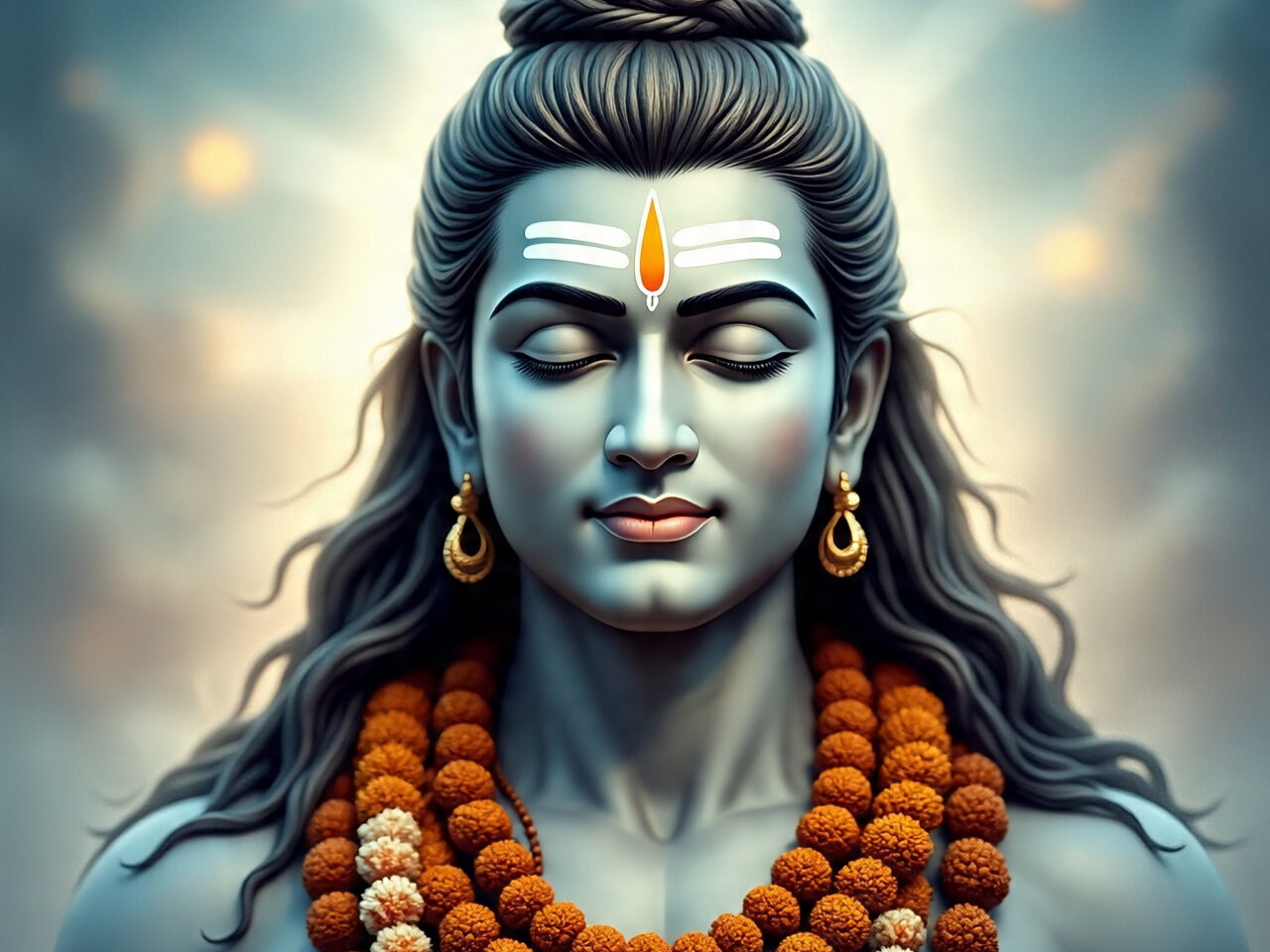
- Tryambakam (त्र्यम्बकं): Trya (Three) + Ambaka (Eyes). We worship the Three-Eyed One (Lord Shiva). The three eyes signify the sun, the moon, and fire (wisdom). He sees the past, present, and future.
- Yajāmahe (यजामहे): We worship, adore, and honor. It implies an active exchange of love and respect.
- Sugandhim (सुगन्धिं): The Fragrant One. Just as a flower spreads its scent without effort, Shiva’s essence pervades the entire universe. It also refers to the spiritual fragrance of virtue.
- Puṣhṭi-vardhanam (पुष्टिवर्धनम्): Pushti (Nourishment/Well-being) + Vardhanam (Increaser). He is the Nourisher who sustains our health, wealth, and spiritual growth. He is the gardener of our lives.
- Urvārukam-iva (उर्वारुकमिव): Like a cucumber (specifically the melon-cucumber). This is the key metaphor of the mantra.
- Bandhanān (बन्धनान्): From bondage or attachment (specifically the stem that holds the fruit).
- Mṛityor-mukṣhīya (मृत्योर्मुक्षीय): Mrityor (From Death) + Mukshiya (Liberate). Liberate us from death.
- Mā’mṛitāt (मामृतात्): Ma (Not) + Amritat (Immortality). But not from immortality.
The “Cucumber” Metaphor Explained
Why a cucumber? When a cucumber or melon ripens, it separates effortlessly from the vine. It doesn’t need to be ripped or forced. Similarly, we pray to Shiva not to die prematurely, but to mature spiritually so that when the time comes, we leave this body as effortlessly as a ripe fruit falls from the vine—without pain, struggle, or attachment.
Full Translation
“We worship the Three-Eyed Lord (Shiva), who is fragrant and the nourisher of all beings. As the ripe cucumber is liberated effortlessly from its bondage (the vine), May He liberate us from death (the cycle of birth and dying), but not from immortality (Moksha).”
How to Chant for Health and Healing
If you are chanting this specifically for health recovery or mental anxiety, follow these guidelines:
- The Sankalpa (Intention): Before starting, close your eyes and mentally state, “I am chanting this for the healing of [Name/Self].”
- The Count: Use a Rudraksha Mala. The standard count is one mala (108 times). For critical health issues, pundits often recommend higher counts, but consistency (108 daily) is key for personal practice.
- The Pronunciation: Pay attention to the sound “Mrityor-Mukshiya” (Liberate from death). Feel the vibration in your chest.
- The Visualization: As you chant, visualize a white, healing light emanating from Lord Shiva (or the Jyotirlinga) and filling every cell of the sick person’s body, dissolving the illness.
Benefits of the Maha Mrityunjaya Mantra
- Longevity: It is believed to ward off accidents and premature death (“Akaal Mrityu”).
- Healing: It creates a vibrational shield that reduces anxiety and promotes physical healing.
- Peace of Mind: It aligns the mind with the reality of existence, reducing the fear of the unknown.
- Spiritual Liberation: It reminds us that we are not the body, but the immortal soul.
Conclusion
The Maha Mrityunjaya Mantra is more than a lifeline in times of trouble; it is a daily reminder of life’s goal. By chanting it, we ask Lord Shiva not just for a long life, but for a life well-lived—one that ripens into wisdom and ends in liberation.
Whether you are facing a health crisis or seeking deep meditation, let the vibrations of Om Tryambakam be your anchor.
Frequently Asked Questions (FAQ)
Can women chant the Maha Mrityunjaya Mantra?
Yes, absolutely. There is a misconception that women cannot chant Vedic mantras. In the Bhakti tradition, devotion supersedes rigid rules. Anyone with a pure heart can chant this.
Can I listen to the audio instead of chanting?
Listening is beneficial and creates a positive aura, but chanting (even mentally) is more powerful because it engages your own breath and vibration.
Is there a specific time to chant this?
While the Brahma Muhurta (early morning, 4:00–6:00 AM) is ideal, this mantra can be chanted anytime you feel fear or need healing.
Can I chant this for someone else?
Yes. This is often done for sick relatives. Simply hold them in your mind (Sankalpa) before you begin the chant.
What is the correct mantra for Maha Mrityunjaya?
The correct Vedic Maha Mrityunjaya Mantra (from Rig Veda 7.59.12) is:
“Om Tryambakam Yajamahe Sugandhim Pushti-Vardhanam | Urvarukamiva Bandhanan Mrityor Mukshiya Maamritat ||”
Meaning: “We worship the Three-Eyed One (Lord Shiva), who is fragrant and nourishes all beings. As a ripe cucumber is liberated from its bondage to the creeper, may He liberate us from death for the sake of immortality, and not separate us from the nectar of eternal life.”
Why is Maha Mrityunjaya Mantra so powerful?
The Maha Mrityunjaya Mantra is considered powerful because it combines intent (Sankalpa) with sound vibration (Nada Brahma).
Vibrational Healing: The specific arrangement of syllables creates a resonance in the body that is believed to realign the chakras and calm the nervous system, actively reducing stress and anxiety.
The “Kavacha” (Shield) Effect: In Vedic tradition, this mantra creates a spiritual shield around the chanter, protecting them from accidents, untimely death, and negative energies.
Conquering Fear: Unlike other mantras that ask for material gain, this mantra asks for liberation from the fear of death. By removing this root fear, it unleashes immense mental strength and healing power within the body.