
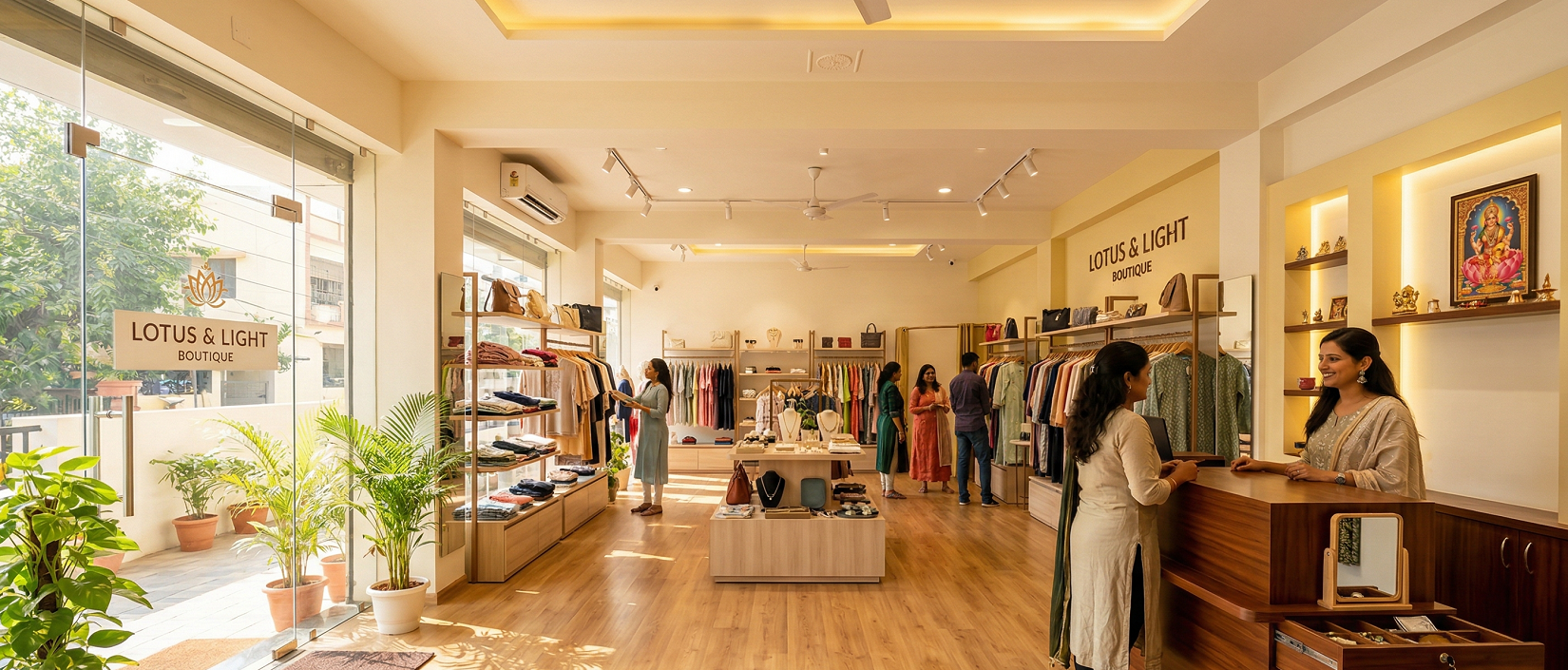
Have you ever walked into a shop and immediately felt like turning around and leaving? Or maybe you’ve visited a small, crowded store that somehow felt incredibly welcoming and “lucky”?
Most people call it “the vibe.” In India, we call it Vastu Shastra.
I remember a friend of mine, Rahul, who opened a beautiful garment boutique a few years ago. He had the best collection, great prices, and a prime location. Yet, for the first six months, people would look at his window display and just… walk past. He was frustrated and ready to close down.
I suggested he make a few small changes based on Vastu—nothing expensive, just shifting a few things around. Within a month, his footfall doubled. It wasn’t magic; it was about fixing the flow of energy.
If your shop feels “stuck” or you want to boost your sales, here are 7 practical Vastu tips to help you attract customers and keep that cash register ringing.
1. The Entrance: Your First Impression Matters
The entrance of your shop is like a mouth—it’s how the building “breathes” in energy. If the entrance is blocked or dark, how can customers (and prosperity) find their way in?
- The Direction: Ideally, the entrance should face North, East, or Northeast. These directions are considered auspicious and bring in positive solar energy.
- The Obstacle Test: Stand outside your shop. Is there a big electric pole, a tree, or a pile of trash right in front of the door? In Vastu, this is called a “Vedh.” It blocks the flow of wealth.
- The Solution: Keep the entrance crystal clean. Add a bright light above the door and perhaps a small, beautiful plant to make it look inviting.
2. The Cash Counter: Where the Wealth Resides
The cash counter is the most important part of your business. If it’s in the wrong place, money might come in, but it will flow out just as fast.
- The Placement: Your cash counter should ideally be in the North or Southwest corner. If it’s in the North, ensure it opens towards the North (the direction of Lord Kuber, the god of wealth).
- The Mirror Trick: Here’s a little “pro tip” many successful jewelers use: Place a small mirror inside your cash drawer so that it reflects the money. In Vastu, this symbolizes doubling your wealth.
- The Golden Rule: Never leave your cash drawer completely empty. Even when you close for the day, keep at least a few coins or a small note inside.
3. Where the Boss Sits
As the owner, you are the “captain of the ship.” If the captain is unstable, the ship will wobble.
I once visited a hardware store where the owner sat right in the middle of the entrance path. He was constantly interrupted and felt stressed. We moved his desk to the Southwest corner, and he started facing East while talking to customers.
- Why Southwest? This corner represents stability and “earth.” Sitting here gives you authority and helps you make better business decisions.
- Facing Direction: Always try to face North or East while sitting. It keeps your mind fresh and helps you stay polite and energetic with customers, even during a long shift.
4. Heavy Goods vs. Light Goods
The way you stack your products can actually change the “weight” of the room’s energy.
- The Heavy Side: If you sell heavy items (like furniture, large electronics, or sacks of grain), keep them in the South or West sections of the shop.
- The Light Side: Keep the North and East sides as light and open as possible. This allows the morning sunlight and fresh energy to circulate.
Think of your shop like a boat. If all the weight is on one side, it tips over. Vastu helps you balance that weight so your business sails smoothly.
5. The “Brahmasthan”: Keep the Center Clear
In Vastu, the center of any space is called the Brahmasthan. It’s the “heart” of the shop.
A common mistake shop owners make is piling up boxes or building a heavy pillar right in the center of the floor to save space. This “chokes” the energy of the shop.
- The Fix: Try to keep the center of your shop as empty and clean as possible. If you must have something there, make sure it’s light and doesn’t block the view from one end to the other. A clear center makes the shop feel bigger and more “breathable” for customers.
6. Use Colors That Sell
Colors aren’t just for decoration; they affect our psychology. Ever notice why fast-food places use red and yellow? It makes you hungry and fast-moving. For a shop, you want colors that make people feel comfortable and ready to spend.
- Recommended Colors: Light yellow, cream, white, or light green are fantastic for shops. They reflect light and make the space feel positive.
- What to Avoid: Dark blue, black, or dark grey on the walls can make a shop feel “heavy” and gloomy. Customers tend to spend less time in dark, moody shops unless it’s a very specific type of niche boutique.
7. The Power of Water and Fragrance
Energy isn’t just what you see; it’s what you smell and hear.
- The Northeast Fountain: If you have the space, a small water fountain in the Northeast corner is a magnet for wealth. The sound of flowing water mimics the flow of cash.
- Freshness: Use a mild, pleasant incense or a room freshener. A shop that smells like damp cardboard or old dust will drive customers away instantly. Sandalwood or citrus scents are great for business environments.
Common Vastu Mistakes (And How to Fix Them)
| Mistake | Why it’s Bad | The Simple Fix |
| Leaking Taps | Symbolizes “leaking” money. | Fix the plumbing immediately! |
| Broken Clocks | Stops your business growth/progress. | Replace batteries or get a new clock. |
| Cluttered Corners | Traps “stagnant” energy. | Dedicate 10 mins every Sunday to clear out junk. |
| Owner facing South | Leads to arguments and loss of temper. | Shift your chair to face North or East. |
Real-Life Story: The “Empty” Corner
I remember a stationery shop owner who had a very “dark” Northwest corner. He used it to dump old newspapers and broken plastic bins. He complained that his staff was always quitting and he had constant legal small-talk issues.
In Vastu, the Northwest is related to “Support” and “People.” We cleared the junk, painted that corner a light cream color, and put a bright LED bulb there. Within two weeks, he found a loyal helper, and his relationship with his suppliers improved. Sometimes, the solution is just a broom and a lightbulb!
Which direction is the absolute best for a shop entrance?
North, East, and Northeast are the gold standards. North is ruled by Lord Kuber (wealth), and East brings the growth energy of the Sun. If you have a choice, pick one of these three.
Where exactly should I put the cash counter?
Place your cash counter in the Southwest or North part of the shop. Crucially, the drawer should open towards the North. This is believed to keep the “wealth” from flowing out and encourages it to stay with you.
Which direction should the shop owner face?
As the owner, you should always try to face North or East while sitting at your desk or counter. This keeps your energy levels high and helps you stay focused and polite during long customer interactions.
Can a South-facing shop still be successful?
Yes! While North is preferred, many South-facing shops thrive. The key is to keep the entrance in the Southeast or exactly in the center of the South wall. Avoid the Southwest for an entrance if the shop faces South.
What are the luckiest colors for a shop?
Stick to light, soothing shades like cream, white, light yellow, or very pale green. These colors reflect light, making the shop feel spacious and positive. Avoid dark, “heavy” colors like black or dark blue, as they can make customers feel rushed or uneasy.
Where should I keep the Mandir (temple)?
The Northeast corner (Ishanya Kon) is the most sacred spot. Keep it clean, well-lit, and never place it directly on the floor—use a small shelf or a raised platform.
Does Vastu work for a rented shop?
Absolutely. Vastu is about the energy of the space, not who owns the deed. Since you are the one working there, the “vibe” affects your business. You can use simple remedies (like changing your seating or adding a mirror) without doing any permanent construction.
Conclusion: Small Changes, Big Results
Vastu is not about doing a massive renovation or spending lakhs of rupees. It’s about being mindful of how energy moves through your space. Your shop should be a place where you feel happy to spend 8-10 hours a day. If you feel good, your customers will feel good too.
Your Actionable Takeaways:
- Clear the path: Ensure your entrance is wide open and bright tomorrow morning.
- Check your seat: Make sure you are facing North or East when dealing with clients.
- Light up the corners: Don’t let any part of your shop stay pitch dark.
- Clean the center: Move those extra boxes away from the middle of the floor.
Give these tips a try for at least 21 days. You’ll be surprised at how the “vibe” of your shop changes, and more importantly, how your customers start noticing you!
Do you have a specific corner in your shop that always feels messy or “off”? Ask yourself if it’s blocking your path to success.
About the Author Jagdish Vajpeyee is the founder of Vastu Dharma and a Vastu Shastra consultant with a specialized focus on Vedic Astrology. With a professional background in banking, Jagdish brings a unique, analytical approach to ancient wisdom, helping modern families and businesses correct their energy flow without unnecessary demolition. He is passionate about merging traditional Indian architecture with contemporary lifestyle needs.
Disclaimer: The information provided in this article is for educational and informational purposes only. Vastu Shastra is an ancient architectural and energetic system; while many individuals find value in its principles for creating a harmonious environment, these suggestions are based on traditional interpretations and personal research. This content is not intended to be a substitute for professional architectural, legal, financial, or medical advice. The author and this website do not guarantee specific outcomes—such as financial gain or health improvements—resulting from the application of these tips. Before making significant structural modifications to your home or basement, please consult with a licensed architect or structural engineer to ensure the safety and integrity of your property.