
I remember visiting a close friend about two years ago—let’s call him Rahul. Rahul was a brilliant guy, a top-tier consultant who had just started his own firm. But every time we spoke, he sounded exhausted. “Jagdish,” he told me, “I’m getting the clients, the work is getting done, but the money just isn’t staying. It feels like I’m trying to catch water with a sieve.”
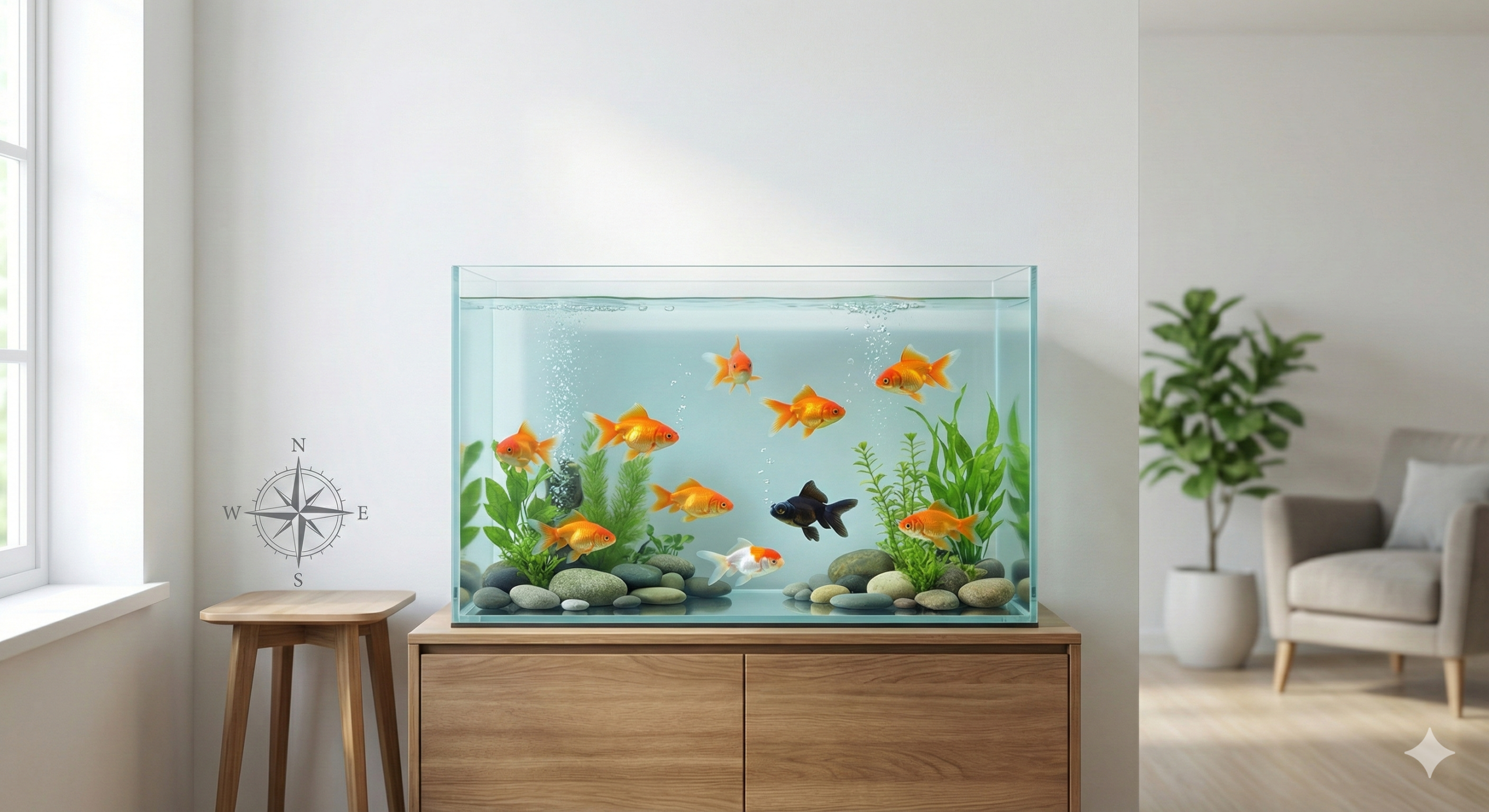
When I walked into his home office, I saw it immediately: a massive, beautiful aquarium. It was full of vibrant goldfish and bubbling filters. The problem? He had placed it right in the South-West corner of his room.
In the world of Vastu, the South-West is the zone of Stability and Earth. By placing a massive tank of moving water there, he was literally “washing away” his foundation. He was creating instability in the very spot meant to ground his business. We moved that tank to the North wall that weekend. Three months later? His “leaky bucket” problem had vanished.
An aquarium isn’t just a piece of home decor; it’s a powerful engine of living energy. If you place it correctly, it acts like a magnet for prosperity. Place it wrong, and you might find your success “drowning” before it even has a chance to breathe.

The Energy of Moving Water: It’s Not Just a Decoration
Most people buy an aquarium because they like the sound of the water or the way the fish look. But from a Vastu and energetic perspective, you are introducing one of the most volatile elements into your home: Moving Water.
Think about a river. When it flows gently and stays within its banks, it brings life to everything around it. But if that same water becomes stagnant, it breeds disease. If it flows too fast or in the wrong direction, it causes a flood.
In your home, an aquarium represents the Water Element. Because the water is constantly moving (thanks to the filter and the fish), it keeps the energy (
-) in that area active. This is why we use it to stimulate “stale” areas of a house. However, water is heavy. It carries weight. If you put that “movement” and “weight” in a zone that requires stillness—like a bedroom or the center of the house—you create a clash of energies that usually results in mental stress or financial “leakage.”
The “Flow” Factor in Modern Homes
In modern apartments, especially in places like Sydney or New York where space is tight, we often tuck aquariums into whatever corner is “empty.” This is a mistake.
I often tell people to look at their bank accounts. If you see money coming in but disappearing through unexpected repairs, medical bills, or lost opportunities, check your water elements. Moving water in the South or South-West is like having a hole in your pocket. You’re moving the energy of “Stability,” which means nothing in your life can stay firm.
The North and East: The Sweet Spots for Wealth
If you want to use an aquarium to actually boost your career and bank balance, there are two primary directions you should look at: North and East.
Why the North Zone is Your “Career Compass”
In Vastu Shastra, the North is ruled by Lord Kubera, the god of wealth, and is associated with the Water element itself. This is the most natural home for an aquarium.
When you place a clean, well-maintained aquarium on a North wall, you are effectively “tuning” your home to the frequency of opportunity. I’ve seen this work wonders for people in the banking sector or those looking for new job offers. The movement of the fish keeps the “Career Energy” from becoming stagnant.
A Real-Life Tip:
If you are placing it in the North, try to use a rectangular or square tank. Avoid circular tanks here if possible, as the North responds best to structures that feel organized. Keep the water crystal clear. Murky water in the North leads to “cloudy” thinking regarding your finances.
The East: For Social Connectivity and Growth
The East is ruled by the Sun and represents your social circle and “outward” growth. If you feel like your business is good but nobody knows about you, the East is your spot. An aquarium here helps in “expanding” your reach. It makes you more visible to the right people.
Common Mistakes: Where “Good Intentions” Lead to Bad Luck
I often see people buy an aquarium with the best of intentions, thinking, “I’ll just put this beautiful thing wherever I spend the most time.” But Vastu is a science of balance, and placing a water element in the wrong room is like trying to put a powerful car engine into a bicycle—it’s just going to cause a crash.
1. The Bedroom: The “Relationship Drowner”
This is perhaps the most frequent mistake I encounter. People love the soothing sound of bubbling water while they sleep. However, in Vastu, the bedroom is a place for Fire (Passion) and Earth (Stability).
- The Problem: Water “extinguishes” fire. Placing an aquarium in the bedroom can lead to a “cooling” of emotions between couples.
- The Reality: On a more practical level, the constant movement of fish and the hum of the pump keep your subconscious mind active. You might find yourself waking up tired or feeling restless, which eventually impacts your performance at work.
2. The Kitchen: The Elemental War
If the bedroom is about passion, the kitchen is literally about the fire that sustains your health.
- The Conflict: Fire and Water are arch-enemies. Placing an aquarium in the kitchen—or even directly opposite the stove—creates an elemental clash.
- The Result: This often manifests as digestive issues for the family or constant, “heated” arguments over small things. If you want a peaceful home, keep the water out of the cooking zone.
3. Under a Beam or Stairs
In my years in banking, I’ve seen how “pressure” affects a person’s ability to make decisions. In Vastu, a structural beam or a staircase represents heavy downward pressure.
- The Mistake: Placing a living aquarium under this pressure “suffocates” the energy of the fish.
- The Solution: If your aquarium is under a beam, you might feel like your finances are constantly “suppressed,” no matter how hard you work. Move it to an open wall where the energy can rise freely.
The “Banker’s Logic” to Fish Selection: Quality Over Quantity
As someone who has spent over a decade in the banking world, I look at an aquarium the same way I look at a high-performing investment portfolio. It’s not about how many assets you have; it’s about the health and movement of those assets.
The Power of the Number Nine
In many Vedic traditions, the number nine is considered complete and auspicious. A classic Vastu setup involves 9 fish:
- 8 Goldfish or Arowana: These represent wealth and “gold” (prosperity).
- 1 Black Moor (Black Fish): This is the most important one. The black fish acts as a “security guard.” It is believed to absorb the negative energy (the “evil eye”) entering the home, protecting the other fish and your family.
When a Fish Passes Away
I get calls all the time from panicked clients saying, “Jagdish, one of my fish died! Is this a bad omen?”
My Answer: No. In fact, it’s often the opposite. In Vastu, it is believed that if a fish dies naturally, it has “taken the hit” for a problem that was coming your way.
- The Action Step: Simply thank the fish, dispose of it respectfully, and replace it with a new one of the same color. Keep the “portfolio” of nine complete.
Maintenance: The “Audit” Your Success Depends On
A dirty aquarium is worse than no aquarium at all. Think of your tank like a financial statement. If it’s messy, confusing, and full of “waste,” you can’t expect to see growth.
The “Clarity” Rule
If the water in your tank is cloudy, your mind will be cloudy. I’ve noticed that when people let their tanks get algae-ridden and dark, their career paths seem to stall.
- Practical Tip: Clean the glass and change 20% of the water every week. Ensure the filter is working quietly. A loud, grinding pump creates “noise” in your environment that can lead to irritability and poor decision-making.
Light and Life
Ensure your aquarium has a good light source. In the North or East, light represents the “Sun” (energy) hitting the “Water” (opportunity). This combination creates the “steam” or “momentum” needed to move your life forward.
Actionable Takeaways for Your Success
To make sure your aquarium is a bridge to success rather than a weight dragging you down, follow this “Quick Audit” checklist:
- Check the Direction: Move your tank to the North (for money) or East (for social growth) today.
- Avoid the “Forbidden Zones”: Immediately remove any water elements from the South-West, Bedroom, or Kitchen.
- The Security Guard: Ensure you have at least one black fish to absorb negativity.
- Keep it Moving: Make sure the aerator is always on. Stagnant water = stagnant income.
- The “A Banker’s Secret”: If you are facing a legal or debt issue, place the aquarium in the North-West (the zone of support and helpful people). This can help attract the right mentors or legal aid to clear your path.
Conclusion
An aquarium is a living, breathing Vastu remedy. It’s a microcosm of the universe’s flow. When you align that flow with the natural directions of your home, you stop swimming against the current and start letting the current carry you toward your goals.
Don’t let your success drown in a misplaced tank. Audit your space, move your aquarium, and watch how the “leaky bucket” of your life finally starts to fill up.
Frequently Asked Questions about Vastu Aquarium Placement
Which direction is best for an aquarium according to Vastu?
The North and East directions are the most auspicious. The North is governed by the Lord of Wealth (Kubera), making it ideal for financial growth, while the East helps in social connectivity and career expansion.
Can I keep an aquarium in my bedroom?
No. Vastu strongly advises against placing an aquarium in the bedroom. Water elements in a sleeping area can cause mental restlessness, disturbed sleep, and may create emotional distance between couples.
What is the significance of the black fish in a Vastu aquarium?
A single black fish (like a Black Moor) acts as a protective shield for the home. It is believed to absorb negative energy or the “evil eye.” If a black fish dies naturally, it is thought to have neutralized a misfortune meant for the family.
How many fish should I keep for good luck?
The most common and effective number is nine. Typically, this includes eight goldfish (symbolizing prosperity) and one black fish (for protection). This combination creates a balanced energetic “portfolio.”
Is a South-West placement really bad for an aquarium?
Yes. The South-West is the zone of the Earth element and stability. Introducing a heavy, moving water element here “washes away” your foundation, often leading to financial instability and a lack of support in your professional life.
What should I do if a fish dies?
Do not panic. A fish dying naturally is often seen as it taking a negative energy hit on your behalf. Simply remove the fish respectfully and replace it with a new one of the same color as soon as possible to keep the count at nine.
Can I place an aquarium under a staircase?
It is not recommended. Placing a living energy source like an aquarium under the “heavy pressure” of a staircase can suffocate your growth and make you feel constantly burdened by responsibilities.
About the Author Jagdish Vajpeyee is the founder of Vastu Dharma and a Vastu Shastra consultant with a specialized focus on Vedic Astrology. With a professional background in banking, Jagdish brings a unique, analytical approach to ancient wisdom, helping modern families and businesses correct their energy flow without unnecessary demolition. He is passionate about merging traditional Indian architecture with contemporary lifestyle needs.
Disclaimer: The information provided in this article is for educational and informational purposes only. Vastu Shastra is an ancient architectural and energetic system; while many individuals find value in its principles for creating a harmonious environment, these suggestions are based on traditional interpretations and personal research. This content is not intended to be a substitute for professional architectural, legal, financial, or medical advice. The author and this website do not guarantee specific outcomes—such as financial gain or health improvements—resulting from the application of these tips. Before making significant structural modifications to your home or basement, please consult with a licensed architect or structural engineer to ensure the safety and integrity of your property.