Start your day with peace. Read the Shiv Pratah Smaran Stotram in Sanskrit with English translation. Discover the spiritual benefits of this powerful morning chant.
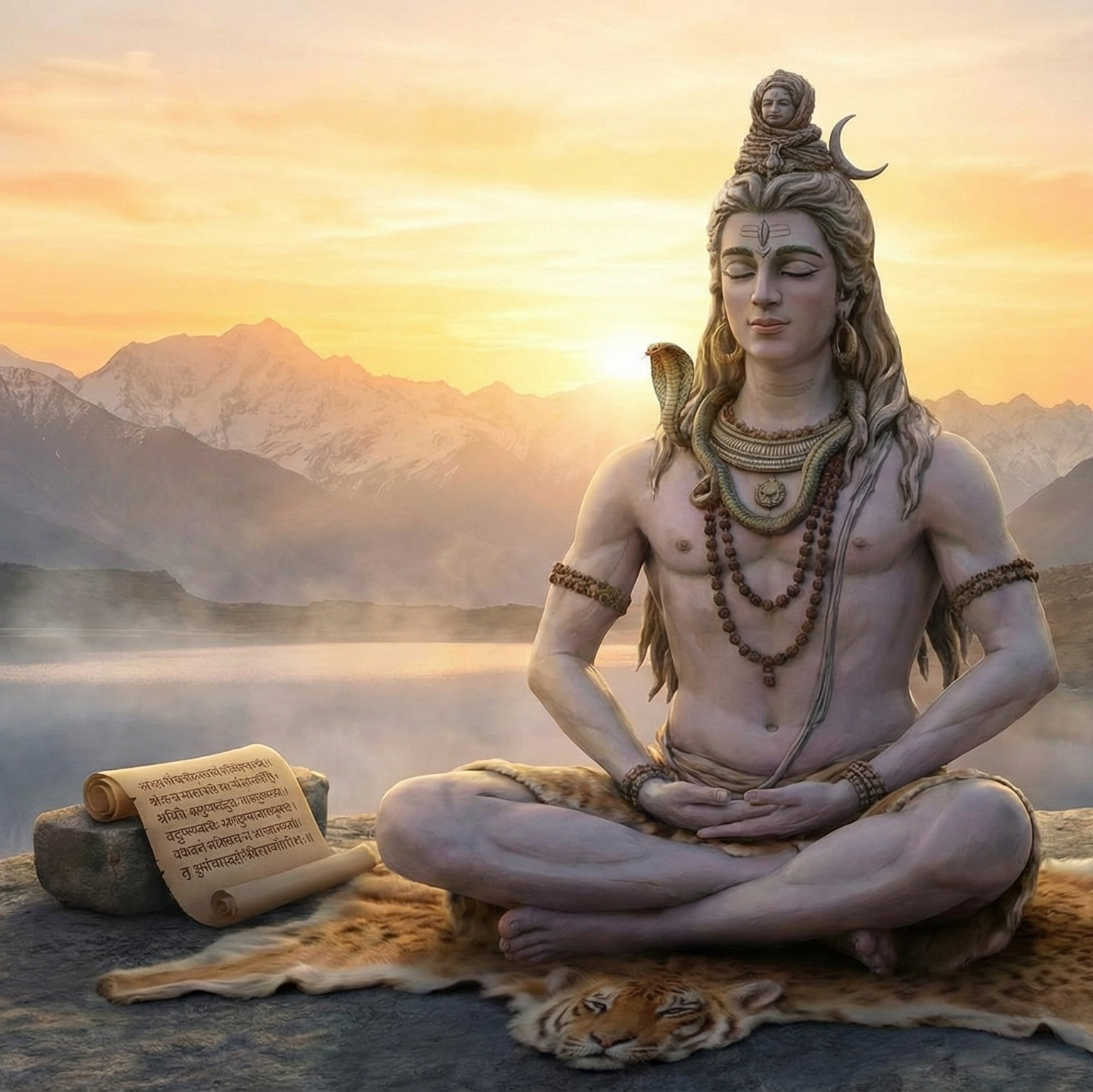
“How you begin your morning often dictates the energy of your entire day. In the rush of modern life, waking up with a sense of clarity and fearlessness is a rare gift. This is where the ancient wisdom of the Shiv Pratah Smaran Stotram serves as a spiritual anchor. Known as the ultimate Shiva Morning Prayer, this sacred chant is not just a ritual; it is a powerful tool to destroy the fear of worldly existence (Bhavabhiti Haram) and center the mind. Whether you are looking for the authentic Shiv Pratah Smaran Stotram lyrics in Sanskrit, a deep Shiv Pratah Smaran translation in English, or simply wish to understand the spiritual benefits of reciting this daily Shiva prayer, you have arrived at the right place. Let us invoke the Lord of the Himalayas and fill our morning with his divine presence.”
Shiv Pratah Smaran Stotram (Morning Remembrance Hymn of Lord Shiva).
This hymn consists of three main verses recited upon waking up to invoke the energy of Lord Shiva, removing the fear of worldly existence and instilling peace.
Verse 1: Smarami (Remembrance)
Sanskrit:
प्रातः स्मरामि भवभीतिहरं सुरेशं
गङ्गाधरं वृषभवाहनमम्बिकेशम् ।
खट्वाङ्गशूलवरदाभयहस्तमीशं
संसाररोगहरमौषधमद्वितीयम् ॥१॥
English Translation:
“In the early morning, I remember the Lord of Gods, who destroys the fear of worldly existence.
He who bears the River Ganga, who rides the bull (Nandi), and who is the Lord of Ambika (Parvati).
He holds a skull-staff (Khatvanga) and a trident (Trishul) in his hands, and shows the gestures of boon-giving (Varada) and fearlessness (Abhaya).
He is the Lord, the unique medicine that cures the disease of the cycle of birth and death.”
Verse 2: Namami (Salutation)
Sanskrit:
प्रातर्नमामि गिरिशं गिरिजार्धदेहं
सर्गस्थितिप्रलयकारणमादिदेवम् ।
विश्वेश्वरं विजितविश्वमनोभिरामं
संसारतारकमनंतविभुं त्रिनेत्रम् ॥२॥
English Translation:
“In the early morning, I bow to the Lord of the Mountains (Girisham), whose body is shared by the Daughter of the Mountain (Parvati—Ardhanarishvara form).
He is the Primal God (Adi Deva), the cause of creation, sustenance, and dissolution.
He is the Lord of the Universe, who has conquered the world, who is delightful to the mind.
He is the savior from the cycle of worldly existence, the infinite all-pervading Lord with three eyes.”
Verse 3: Bhajami (Worship)
Sanskrit:
प्रातर्भजामि शिवमेकमनन्तमाद्यं
वेदान्तवेद्यमनघं पुरुषं महान्तम् ।
नामादिभेदरहितं षड्भावशून्यं
संसारतारक नमामि शिवं परब्रह्म ॥३॥
English Translation:
“In the early morning, I worship the One, Infinite, and Primal Shiva.
He is known through Vedanta (the Upanishads), the sinless, Great Being (Purusha).
He is beyond names and forms, devoid of the six states of existence (birth, existence, growth, change, decay, and death).
I bow to Shiva, the Supreme Brahman, the savior from the ocean of worldly existence.”
Phala Shruti (Benefits of Recitation)
Sanskrit:
श्लोकत्रयमिदं पुण्यं प्रात: रुत्थाय य: पठेत् ।
शिवलोकमाप्नोति शिवेन सह मोदते ॥
English Translation:
“Whoever rises in the morning and recites these three sacred verses,
Attains the abode of Shiva (Shivaloka) and rejoices eternally with Shiva.”
Embrace the Power of the Morning Chant
Integrating the Shiv Pratah Smaran Stotram into your daily routine is more than just a recitation; it is a commitment to inner peace and fearlessness. By starting your day with this daily Shiva prayer, you align your consciousness with the eternal energy of Lord Shiva, ensuring that no matter what challenges the day brings, you remain grounded and calm. The benefits of reciting this morning prayer unfold gradually, transforming your mindset from one of anxiety to one of absolute confidence.
🔥 Join the 21-Day Shiva Chanting Challenge
Spiritual transformation requires consistency. We invite you to take up a simple challenge:
- Commit: Recite the Shiv Pratah Smaran Stotram every morning upon waking for the next 21 days.
- Observe: Keep a small journal of how your mood and focus shift during this period.
- Share: Let us know your experience in the comments below!
Spread the Divine Energy If this Shiva Stotram English translation and guide brought you peace, please share this post with your friends and family on WhatsApp or Facebook. Let’s help others start their mornings with the divine blessings of Mahadev.
Frequently Asked Questions (FAQ)
What is the best time to recite the Shiv Pratah Smaran Stotram?
As the name Pratah (Morning) and Smaran (Remembrance) suggests, the best time to recite this is immediately upon waking up. Traditionally, it is recited while sitting on your bed, even before stepping your feet onto the ground or taking a bath.
What are the benefits of chanting the Shiv Pratah Smaran?
The primary benefit is the removal of the fear of worldly existence (Bhava-Bhiti Haram). Reciting this morning prayer instills a deep sense of peace, aligns your focus with the divine, and serves as a spiritual shield against anxiety for the rest of the day.
Can I recite this mantra without taking a bath?
Yes. Unlike many other Vedic rituals that require physical purity (Snana), the Pratah Smaran is designed to be a mental cleansing. It is intended to purify your thoughts the moment you wake up, making it permissible to chant before your morning shower.
Is this stotram difficult to learn for beginners?
Not at all. The Shiv Pratah Smaran Stotram consists of only three short verses (plus the benefit verse). It is one of the easiest and most potent Shiva chants for beginners to memorize.
Where can I find the correct pronunciation of the Sanskrit lyrics?
It is best to listen to audio renditions by traditional pundits to get the intonation (chhandas) correct. However, reading the Sanskrit text with English translation provided in this article will help you understand the meaning, which is just as important as the pronunciation.