

In Hindu tradition, no ritual, work, or day begins without invoking Lord Ganesha. He is Vighnaharta—the remover of obstacles. While the Shiva Pratah Smaran connects us to the infinite peace of the soul, the Ganesha Pratah Smaran ensures that our worldly interactions throughout the day are smooth, successful, and free from hindrances.
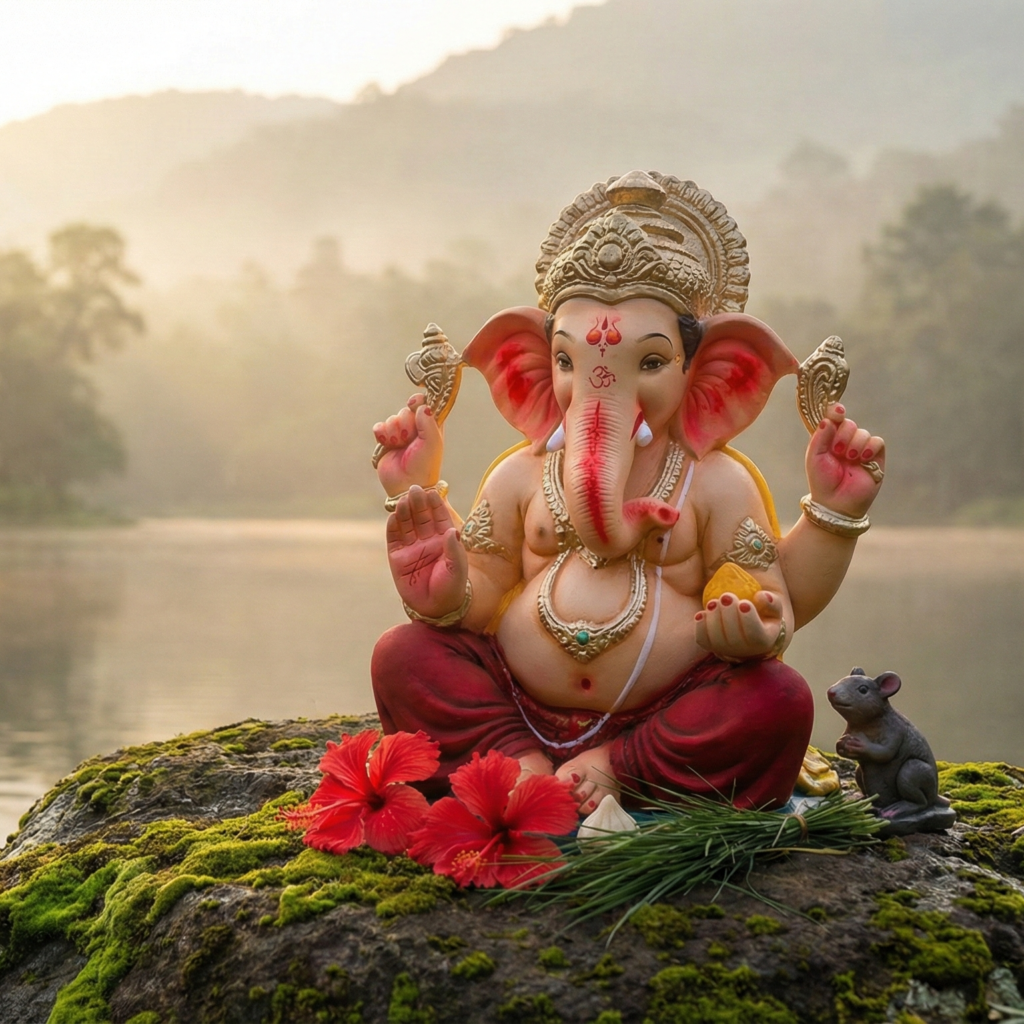
Reciting these three verses immediately upon waking aligns your intellect with the divine wisdom of Ganpati.
Verse 1: Smarami (Remembrance)
Sanskrit:
प्रातः स्मरामि गणनाथमनाथबन्धुं
सिन्दूरपूरपरिशोभितगण्डयुग्मम् ।
उद्दण्डविघ्नपरिखण्डनचण्डदण्डं
आमीगभर्भिहरिमसुरसुरैः सेव्यमानम् ॥१॥
Transliteration: Prātaḥ smarāmi Gaṇanātham-anātha-bandhuṁ Sindūra-pūra-parishobhita-gaṇḍa-yugmam | Uddaṇḍa-vighna-parikhaṇḍana-chaṇḍa-daṇḍaṁ Āmī-gabhir-bhiharim-asura-suraiḥ sevyamānam ||1||
English Translation:
“In the early morning, I remember the Lord of the Ganas (Gananatha), who is the friend of the helpless (Anatha Bandhu).
His cheeks are adorned with the red hue of Sindoor (vermilion).
He wields a fierce staff that ruthlessly destroys powerful obstacles.
He is worshipped by both the Gods (Suras) and the Demons (Asuras).”
Verse 2: Namami (Salutation)
Sanskrit:
प्रातर्नमामि चतुराननवन्द्यमानं
इच्छानुकूलमखिलं च वरं ददानम् ।
तं तुन्दिलं द्विरसनाधिपयज्ञसूत्रं
पुत्रं विलासचतुरं शिवयोः शिवाय ॥२॥
Transliteration: Prātar-namāmi Chaturānana-vandyamānaṁ Icchānukūlam-akhilaṁ cha varaṁ dadānam | Taṁ tundilaṁ dvirasanādhipa-yajñasūtraṁ Putraṁ vilāsa-chaturaṁ Shivayoḥ Shivāya ||2||
English Translation:
“In the early morning, I bow to the one who is worshipped even by the four-faced Creator (Brahma).
He grants all boons according to the desires of his devotees.
He has a pot-belly (Tundila), uses the king of serpents as his sacred thread (Yajnopavita),
And is the playful, clever son of Shiva and Parvati, who bestows auspiciousness.”
Verse 3: Bhajami (Worship)
Sanskrit:
प्रातर्भजामि अभयं खलु भक्तशोक-
दावानलं गणविभुं वरकुञ्जरास्यम् ।
अज्ञानकाननविनाशनहव्यवाहं
उत्साहवर्धनमहं सुतमीश्वरस्य ॥३॥
Transliteration: Prātar-bhajāmi abhayaṁ khalu bhakta-shoka- Dāvānalaṁ Gaṇa-vibhuṁ vara-kuñjarāsyam | Ajñāna-kānana-vināshana-havya-vāhaṁ Utsāha-vardhanam-ahaṁ sutam-īshvarasya ||3||
English Translation:
“In the early morning, I worship the Lord of Ganas, who grants fearlessness.
He is like a forest fire that burns away the sorrows of his devotees.
He has the magnificent face of an elephant (Gajanana).
He is the fire that destroys the forest of ignorance,
I worship the son of Ishwara (Shiva), who increases enthusiasm and vitality.”
Phala Shruti (Benefits of Recitation)
Sanskrit:
श्लोकत्रयमिदं पुण्यं सदा साम्राज्यदायकम् ।
प्रात: रुत्थाय य: पठेत् स च कामान् अवाप्नुयात् ॥
Transliteration: Shloka-trayam-idaṁ puṇyaṁ sadā sāmrājya-dāyakam | Prātaḥ rutthāya yaḥ paṭhet sa cha kāmān avāpnuyāt ||
English Translation:
“Whoever rises in the morning and recites these three sacred verses,
Attains sovereign power and fulfills all their righteous desires.”
Here is the complete, ready-to-publish blog post for Day 1: Shri Ganesha Pratah Smaran Stotram.
How you begin your morning sets the tone for the entire day. While our previous post focused on the inner peace derived from the [Shiv Pratah Smaran Stotram](insert link to your previous Shiva post), practical life often presents us with external challenges.
In the Hindu tradition, it is customary to first bow to Lord Ganesha before undertaking any task, ritual, or new day. He is Vighnaharta, the remover of obstacles, and the patron of intellect and wisdom.
The Shri Ganesha Pratah Smaran Stotram is a powerful three-verse hymn comprised of a remembrance (Smarami), a salutation (Namami), and worship (Bhajami). Reciting this immediately upon waking—even before leaving your bed—is said to clear the path for the day ahead, ensuring success in your endeavors and clarity in your thoughts.
Here is the complete stotram in Sanskrit with English transliteration and translation.
The Significance of Remembering Ganesha at Dawn
Unlike complex rituals that require physical purity or elaborate setups, the Pratah Smaran (Morning Remembrance) is a mental alignment. By focusing your first conscious thoughts on Lord Ganesha, you are asking for:
- Removal of Obstacles: Clearing unforeseen hindrances in your work or studies throughout the day.
- Intellect (Buddhi): Ganesha is the Lord of wisdom. Invoking him sharpens your decision-making abilities.
- Enthusiasm: As mentioned in the third verse, he increases vitality and enthusiasm, combating morning lethargy.
Shri Ganesha Pratah Smaran Stotram: Lyrics and Meaning
Verse 1: Smarami (The Remembrance)
We begin by bringing the divine form of Ganesha into our mind’s eye.
Sanskrit: प्रातः स्मरामि गणनाथमनाथबन्धुं सिन्दूरपूरपरिशोभितगण्डयुग्मम् । उद्दण्डविघ्नपरिखण्डनचण्डदण्डं आमीगभर्भिहरिमसुरसुरैः सेव्यमानम् ॥१॥
Transliteration: Prātaḥ smarāmi Gaṇanātham-anātha-bandhuṁ Sindūra-pūra-parishobhita-gaṇḍa-yugmam | Uddaṇḍa-vighna-parikhaṇḍana-chaṇḍa-daṇḍaṁ Āmī-gabhir-bhiharim-asura-suraiḥ sevyamānam ||1||
English Translation: “In the early morning, I remember the Lord of the Ganas (Gananatha), who is the friend of the helpless. His cheeks are adorned with the red hue of Sindoor (vermilion). He wields a fierce staff that ruthlessly destroys powerful obstacles. He is worshipped by both the Gods (Suras) and the Demons (Asuras).”
Verse 2: Namami (The Salutation)
We bow physically or mentally to acknowledge his supremacy.
Sanskrit: प्रातर्नमामि चतुराननवन्द्यमानं इच्छानुकूलमखिलं च वरं ददानम् । तं तुन्दिलं द्विरसनाधिपयज्ञसूत्रं पुत्रं विलासचतुरं शिवयोः शिवाय ॥२॥
Transliteration: Prātar-namāmi Chaturānana-vandyamānaṁ Icchānukūlam-akhilaṁ cha varaṁ dadānam | Taṁ tundilaṁ dvirasanādhipa-yajñasūtraṁ Putraṁ vilāsa-chaturaṁ Shivayoḥ Shivāya ||2||
English Translation: “In the early morning, I bow to the one who is worshipped even by the four-faced Creator (Brahma). He grants all boons according to the desires of his devotees. He has a pot-belly (Tundila), uses the king of serpents as his sacred thread (Yajnopavita), and is the playful, clever son of Shiva and Parvati, who bestows auspiciousness.”
Verse 3: Bhajami (The Worship)
We offer our devotion and ask for his protective energy.
Sanskrit: प्रातर्भजामि अभयं खलु भक्तशोक- दावानलं गणविभुं वरकुञ्जरास्यम् । अज्ञानकाननविनाशनहव्यवाहं उत्साहवर्धनमहं सुतमीश्वरस्य ॥३॥
Transliteration: Prātar-bhajāmi abhayaṁ khalu bhakta-shoka- Dāvānalaṁ Gaṇa-vibhuṁ vara-kuñjarāsyam | Ajñāna-kānana-vināshana-havya-vāhaṁ Utsāha-vardhanam-ahaṁ sutam-īshvarasya ||3||
English Translation: “In the early morning, I worship the Lord of Ganas, who grants fearlessness. He is like a forest fire that burns away the sorrows of his devotees. He has the magnificent face of an elephant (Gajanana). He is the fire that destroys the forest of ignorance; I worship the son of Ishwara (Shiva), who increases enthusiasm and vitality.”
Phala Shruti (Benefits of Recitation)
Sanskrit: श्लोकत्रयमिदं पुण्यं सदा साम्राज्यदायकम् । प्रात: रुत्थाय य: पठेत् स च कामान् अवाप्नुयात् ॥
Transliteration: Shloka-trayam-idaṁ puṇyaṁ sadā sāmrājya-dāyakam | Prātaḥ rutthāya yaḥ paṭhet sa cha kāmān avāpnuyāt ||
English Translation: “Whoever rises in the morning and recites these three sacred verses attains sovereign power (control over one’s life) and fulfills all their righteous desires.”
Conclusion
Integrating the Ganesha Pratah Smaran Stotram into your morning routine is a simple yet profound practice. It requires only a few minutes but sets a powerful intention for the rest of your day. By invoking the remover of obstacles first thing in the morning, you ensure that your path is clear and your intellect is sharp.
If you are taking part in our 21-Day Chanting Challenge, try alternating between the Shiva Pratah Smaran and this Ganesha Stotram, or recite both to begin your day with complete divine energy.
May Lord Ganesha remove all obstacles from your path today.
Frequently Asked Questions (FAQ)
Should I chant this before or after the Shiva Pratah Smaran?
Traditionally, Ganesha is always worshipped first. It is recommended to chant the Ganesha Pratah Smaran first to remove obstacles in your spiritual practice, followed by the Shiva Pratah Smaran for inner peace.
Do I need a Ganesha idol to chant this?
No. This is a mental remembrance (Smaran). Visualizing Lord Ganesha in your mind (at the space between your eyebrows, the Ajna Chakra) is sufficient.
Is this mantra suitable for students?
Yes, absolutely. As Ganesha is the lord of intellect (Buddhi), this is an excellent morning prayer for students seeking focus and memory retention.
About the Author Jagdish Vajpeyee is the founder of Vastu Dharma and a Vastu Shastra consultant with a specialized focus on Vedic Astrology. With a professional background in banking, Jagdish brings a unique, analytical approach to ancient wisdom, helping modern families and businesses correct their energy flow without unnecessary demolition. He is passionate about merging traditional Indian architecture with contemporary lifestyle needs.
Disclaimer: The information provided in this article is for educational and informational purposes only. Vastu Shastra is an ancient architectural and energetic system; while many individuals find value in its principles for creating a harmonious environment, these suggestions are based on traditional interpretations and personal research. This content is not intended to be a substitute for professional architectural, legal, financial, or medical advice. The author and this website do not guarantee specific outcomes—such as financial gain or health improvements—resulting from the application of these tips. Before making significant structural modifications to your home or basement, please consult with a licensed architect or structural engineer to ensure the safety and integrity of your property.