
We all want our homes to feel like a sanctuary—a place where stress drops away at the door and prosperity feels welcome. In the world of Vastu Shastra, small adjustments can sometimes make a big difference in the energy of a space.
One of the most popular, and frankly adorable, Vastu remedies is the tortoise. You’ve probably seen them in shops or at a friend’s house. They sit quietly on tables or shelves, looking peaceful.
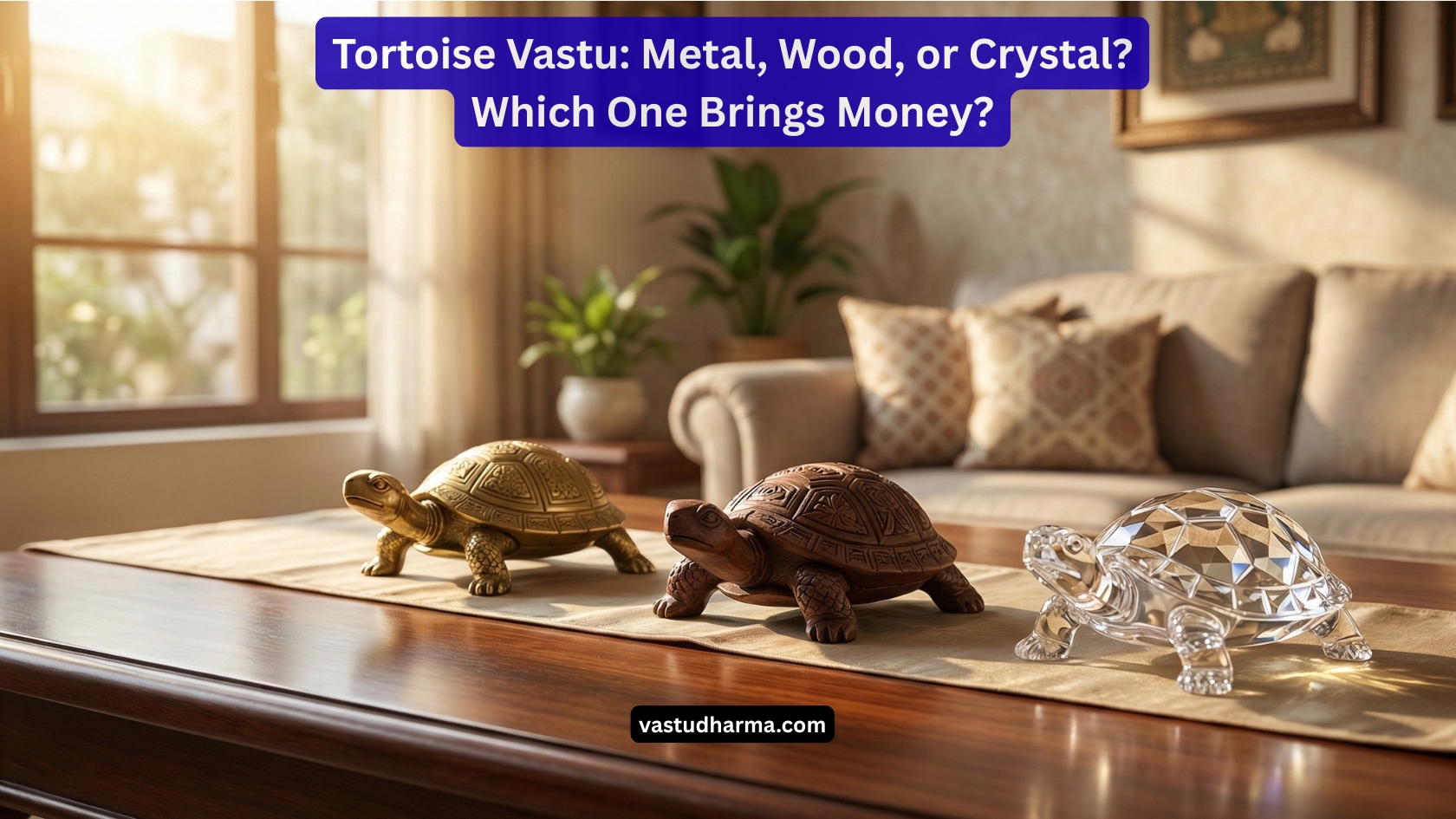
But when you decide to get one for yourself, you hit a confusing roadblock. They come in metal, pretty carved wood, and sparkly crystal.
Suddenly, a simple purchase becomes complicated. Which one actually works for bringing in money? Does the material really matter, or is it just about how it looks?
Let’s walk through this together, keeping it simple and practical, so you can choose the right little guardian for your home.
Why the Tortoise? More Than Just a Decoration
Before we jump into materials, it helps to understand why Vastu experts love the tortoise so much. It’s not magic; it’s about symbolism and energy.
Think about a real tortoise. It lives a very long, slow, and steady life. It carries a heavy, protective shell on its back. When things get scary, it withdraws into that shell and waits for the danger to pass.
In Vastu, the tortoise represents exactly that: stability, longevity, and protection.
The Story of Stability
There’s an ancient Indian story about the churning of the cosmic ocean to find the nectar of immortality. The gods needed a stable base to rest the churning mountain on so it wouldn’t sink. Lord Vishnu took the form of a giant tortoise (Kurma) and supported the mountain on his back.
That’s the energy you are bringing into your home. If your finances feel like a rollercoaster, or your career feels shaky, the tortoise is there to provide a solid foundation so you can build wealth without it crumbling away.
The Big Question: Metal, Wood, or Crystal?
This is where many people get it wrong. They buy the one that looks nicest on their coffee table without realizing that in Vastu, material equals element.
Different materials interact with different directions in your home. Putting the wrong material in the wrong corner can sometimes cause clash instead of harmony.
Here is the simple breakdown of which tortoise does what.
Metal Tortoise: The Heavy Lifter for Career & Cash Flow
If your main goal is sharper business prospects, a better job, or improving the actual flow of money into your bank account, metal is your best bet.
Metal is heavy. It sinks. It grounds energy. In Vastu, metal is closely linked to the water element directions—specifically the North. The North is ruled by Kubera, the lord of wealth.
Real-life example: I knew a freelance graphic designer, Rahul, whose income was very feast-or-famine. Some months were great; others were terrifyingly quiet. He placed a small brass tortoise in the Northern part of his home office, placing it in a shallow bowl of water. He felt it helped “anchor” his business luck, and over the next six months, his client flow became much more consistent.
Best for: Career stability, business growth, and cash flow. Where to put it: North or Northwest direction.
Wooden Tortoise: Growing Health and Harmony
Wood is a living, growing material. It’s associated with new beginnings, health, and family bonds.
A wooden tortoise isn’t usually the first choice for “fast cash.” Instead, think of it as long-term wealth. After all, they say health is wealth, right? If your family is constantly sick or fighting, money drains away quickly on medical bills and stress.
A wooden tortoise helps bring a calm, growing energy to the household.
Best for: Family harmony, good health, and long-term growth. Where to put it: East (the direction of rising energy) or Southeast.
Crystal Tortoise: The Clarity and Cash Magnet
This is perhaps the most popular choice, especially made of glass or lead crystal. Crystal is associated with the Earth element, but because it’s transparent, it also relates to clarity and light.
A crystal tortoise is fantastic for removing mental blocks related to money. If you have opportunities but can’t seem to make the right decision, or if you need financial clarity, crystal helps amplify positive energy.
It is often placed in the Southwest for stability (Earth element corner) or the Northeast for clarity and spiritual grounding.
Best for: Financial clarity, removing obstacles, and amplifying overall good luck. Where to put it: Southwest or Northeast.
Where Do I Put It? (Placement is Everything)
You could have the perfect metal tortoise, but if you put it in the wrong spot, it won’t help you.
The Golden Rule of Direction
The most crucial rule is the direction the tortoise is facing.
The tortoise must always face inside the house.
Imagine the tortoise is slowly walking into your home, bringing good luck with it. If you place it facing the front door or a window, it symbolically means the luck is walking right out.
- Tip: If you place it near the main entrance, turn it so its head is pointing toward the living room, not the door.
The Water Bowl Technique
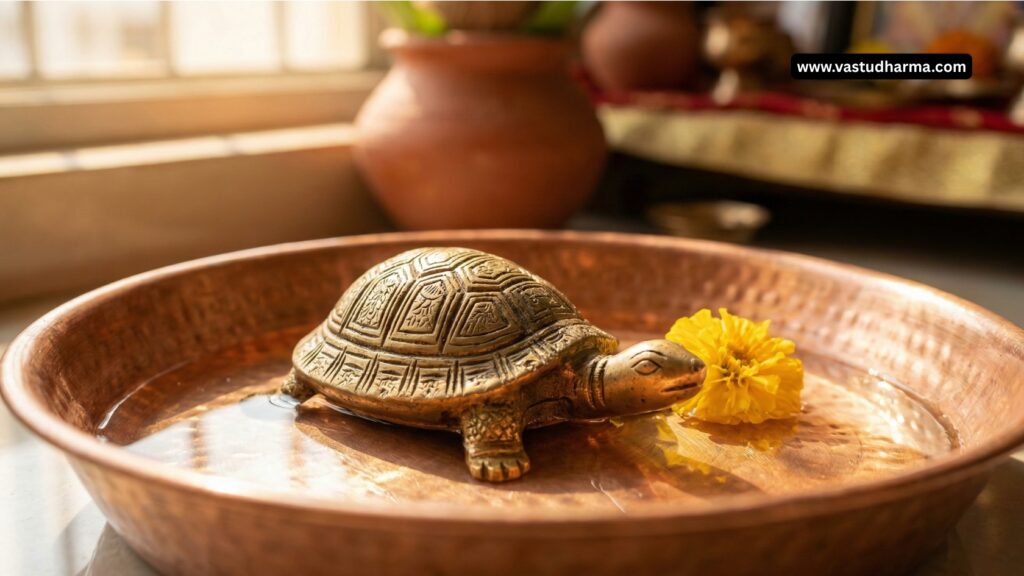
This is a secret weapon for metal and crystal tortoises. Since these materials have a connection to water energy in Vastu, their power increases if kept wet.
Place your metal or crystal tortoise in a shallow glass or metal bowl. Fill it with enough water to cover the tortoise’s feet. You can add a few colorful stones or even a flower petal for aesthetics. This is believed to “activate” the wealth energy.
- Note: Don’t do this with a wooden tortoise, as the wood will rot!
Oops! Common Mistakes That Block the Energy
I’ve seen many homes where a Vastu tortoise is placed incorrectly, unintentionally blocking the very energy they want to attract.
- The Bathroom Blunder: Never, ever place a Vastu item in the bathroom or toilet area. These are areas of high draining energy. Placing a tortoise there is like flushing its positive effects away.
- The Kitchen Clash: Avoid placing the tortoise in the kitchen, especially near the stove. The kitchen is a high-fire zone, which can clash with the stabilizing, watery nature of the tortoise.
- The Bedroom Mistake: It’s generally advised not to keep the tortoise in the master bedroom. The bedroom should be for rest and romance; the active “working” energy of a Vastu remedy can sometimes disturb sleep.
Conclusion
So, which tortoise brings money? The honest answer is that it depends on what kind of “money help” you need right now.
If you need immediate career grounding and better cash flow, go for Metal in the North. If you need clarity to make better financial decisions, choose Crystal in the Northeast.
The tortoise isn’t a lottery ticket. It won’t magically make bags of money appear overnight. Instead, view it as a tool to fix the “wobbly legs” of your home’s energy. When your foundation is stable, building wealth becomes a whole lot easier.
Actionable Takeaways:
- Define your goal: Do you need career stability (Metal) or financial clarity (Crystal)?
- Buy the right material: Stick to standard metals like brass, or clear crystal/glass.
- Check your compass: Find the North or Northeast sector of your living room.
- Face it inward: Ensure the tortoise is looking into the house, not out a door.
- Add water: If it’s metal or crystal, place it in a shallow bowl of fresh water.
Frequently Asked Questions:
Which Vastu tortoise is best for money and wealth?
For attracting wealth, cash flow, and career success, a Metal tortoise (like brass or copper) or a Crystal/Rhinestone tortoise is considered the most powerful. Metal is best for business growth, while crystal is excellent for financial clarity.
Which direction should the tortoise face?
The most critical rule for placement is that the tortoise must always face inward toward the center of your home or office. If it faces the main door or a window, it symbolically means your wealth and good luck are walking out the door.
Should I keep the Vastu tortoise in water?
Yes, but it depends on the material! Metal and crystal tortoises should be placed in a shallow glass or metal bowl with a little water (just enough to cover their feet). Water amplifies their positive energy. However, never put a wooden tortoise in water, as it will damage the wood.
Can I keep a Vastu tortoise in my bedroom?
Vastu experts generally advise against keeping a tortoise in the bedroom. The tortoise brings active, “waking” energy meant for growth and wealth, which can clash with the restful, calming energy you need for good sleep. It is best kept in the living room, home office, or home temple.
Where exactly should I place it in my house?
The placement depends entirely on what you want to achieve:
North: Best for Metal or Black tortoises to boost career, money, and business.
East / Southeast: Best for Wooden tortoises to attract good health and family harmony.
Southwest: Best for Stone or Clay tortoises to bring stability to your life.
Are there places I should absolutely avoid?
Yes. Never place a Vastu tortoise in a bathroom, toilet, or kitchen. Bathrooms are associated with draining energy, and the kitchen’s fire energy clashes with the watery, stabilizing nature of the tortoise. Always keep it off the direct floor; place it on a small table or shelf.
What is the best day to place the tortoise?
According to Vastu principles, the most auspicious days to bring a tortoise into your home and place it in its designated spot are Wednesdays, Thursdays, or Fridays.
About the Author Jagdish Vajpeyee is the founder of Vastu Dharma and a Vastu Shastra consultant with a specialized focus on Vedic Astrology. With a professional background in banking, Jagdish brings a unique, analytical approach to ancient wisdom, helping modern families and businesses correct their energy flow without unnecessary demolition. He is passionate about merging traditional Indian architecture with contemporary lifestyle needs.
Disclaimer: The information provided in this article is for educational and informational purposes only. Vastu Shastra is an ancient architectural and energetic system; while many individuals find value in its principles for creating a harmonious environment, these suggestions are based on traditional interpretations and personal research. This content is not intended to be a substitute for professional architectural, legal, financial, or medical advice. The author and this website do not guarantee specific outcomes—such as financial gain or health improvements—resulting from the application of these tips. Before making significant structural modifications to your home or basement, please consult with a licensed architect or structural engineer to ensure the safety and integrity of your property.