
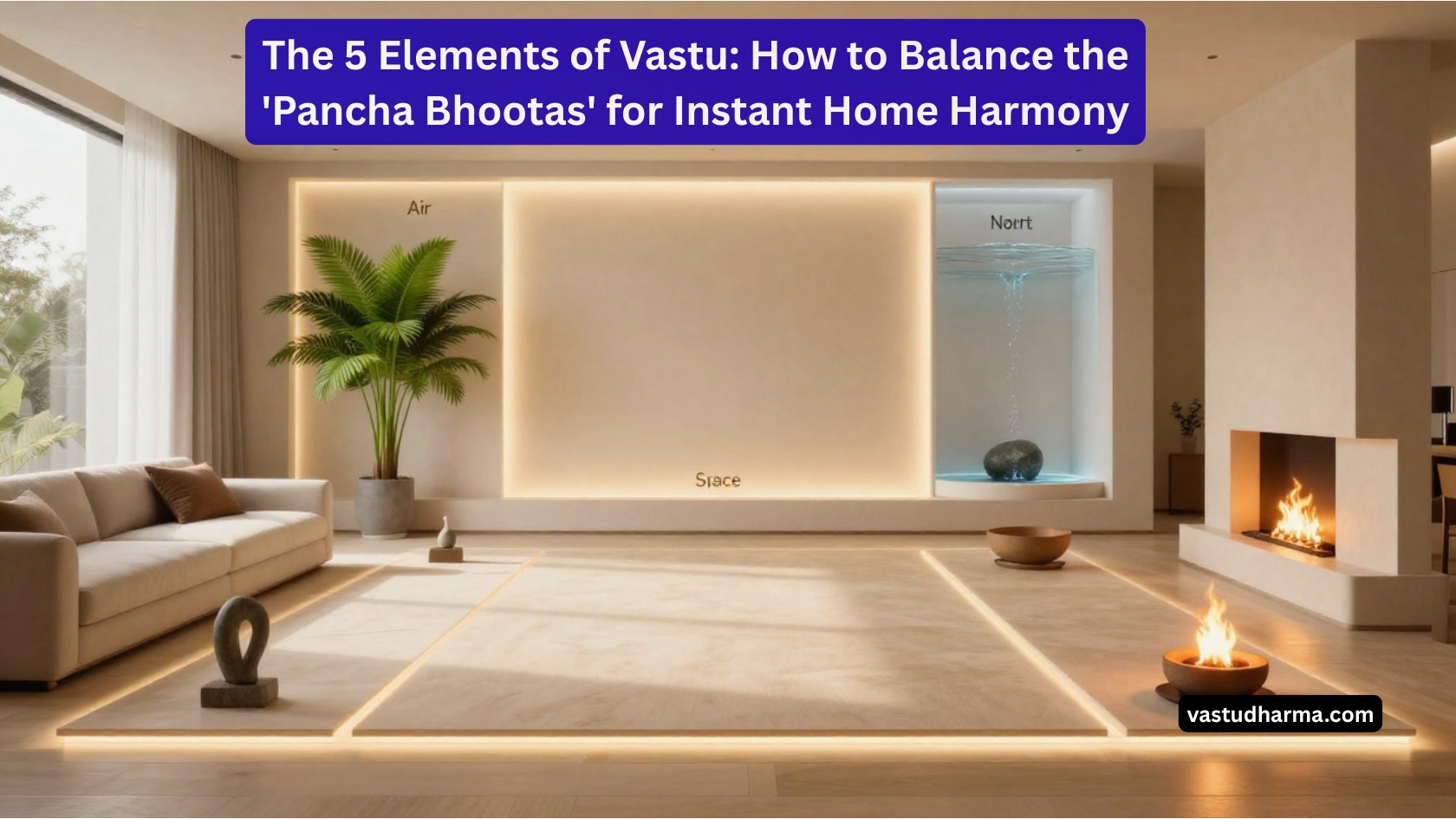
I remember visiting my aunt’s house when I was a teenager. Every time I stepped through her front door, I felt an immediate sense of calm. The air felt cooler, the light felt softer, and even though she lived in the middle of a noisy city, her home felt like a quiet forest. Years later, when I started studying Vastu Shastra, I realized her “secret” wasn’t expensive decor or fancy architecture. She had simply, perhaps even instinctively, balanced the Pancha Bhootas—the five great elements of nature.
In Vedic Vastu, your home is seen as a living organism. Just like your body is made of Earth, Water, Fire, Air, and Space, your house is a combination of these same five forces. When they are in sync, life feels “flowy”—opportunities come easily, and stress stays low. But when they clash? It’s like trying to cook a meal with a broken stove and no water. Things get messy fast.
The beauty of the 5 elements is that you don’t need to be an architect to fix them. You just need to understand how they “feel” in your space. Let’s break down the first few building blocks of a high-vibe home.
1. Earth (Prithvi): The Anchor of Your Life
Think about the last time you felt really stressed out. You probably felt “scattered” or “flighty,” right? That is a lack of the Earth element. In Vastu, Prithvi represents stability, patience, and groundedness. It is the “anchor” that keeps your family and your finances from blowing away when life gets windy.
The “Floating” Freelancer
I once worked with a client, a graphic designer, who was incredibly talented but could never seem to save money. His “office” was a light glass desk in the North-East corner of his living room. He had no heavy furniture, no rugs—just a lot of empty space. He felt like he was constantly “floating.”
We moved his workspace to the South-West (the zone of Earth) and replaced his glass desk with a solid, heavy wooden one. We added a thick, earthy-toned rug under his feet. Within months, he landed his first long-term contract. He finally had the “weight” to hold onto his success.
Common Mistakes with Earth
- Hollow South-West: Leaving the South-West corner of your home empty or light. This is the “Earth” corner; if it’s too light, your stability disappears.
- Underground Voids: Having a large pit or a swimming pool in the South-West. This “breaks” the earth’s foundation.
The Simple Solution
- Ground Yourself: Place your heaviest furniture (wardrobes, heavy sofas, or stone sculptures) in the South-West.
- Use Earthy Colors: Incorporate yellows, ochres, and deep browns in your decor to “summon” the Earth element.
- The Rock Remedy: If you live in a rented apartment and can’t move furniture, place a heavy, natural stone or a group of large crystals in the South-West corner to act as a symbolic anchor.
2. Water (Jal): The Flow of Wealth and Health
Water is the element of movement. In Vastu, Jal governs your “flow”—the flow of thoughts, the flow of new opportunities, and most importantly, the flow of money into your life. Water is refreshing and cleansing, but it must be kept in the right place, or it can “drown” your peace.
Why Placement Matters
I see this mistake more than any other: a beautiful decorative fountain placed in the South-East (the Fire zone). When you put Water where Fire belongs, you “extinguish” your vitality. People in such homes often complain about feeling “exhausted” or having constant digestive issues.
The Story of the Stagnant Corner
A friend of mine had a North-East corner that she used as a “catch-all” storage area for old boots and umbrellas. The North-East is the “Water” zone of the home. Because it was cluttered and dry, her career felt stuck. We cleared the clutter and placed a simple, clean bowl of fresh water with a few floating jasmine flowers there. Every morning, she changed the water. She said it felt like she had finally “opened a window” in her brain.
Practical Tips for Water
- Keep it Clean: Stagnant, dirty water is worse than no water. If you have a fountain, make sure the pump is always working and the water is crystal clear.
- The North-East Advantage: This is the best place for water elements. A small indoor fountain, a fish tank, or even a simple painting of a calm river can do wonders here.
- Fix the Leaks: A dripping faucet is literally “leaking wealth” in Vastu. Fix any plumbing issues immediately to stop the drain on your finances.
3. Fire (Agni): The Spark of Transformation
Fire is all about energy, passion, and digestion. In Vastu, Agni is what turns your hard work into results. Without the fire element, a home feels “cold” and the inhabitants lack the drive to achieve their goals.
The “Cold” Kitchen Syndrome
The kitchen is the heart of the Fire element in any home. I’ve visited homes where the kitchen was tucked away in the North-East (the Water zone). The family was lovely, but they always seemed to be bickering. There was a “clash” between the fire of the stove and the water of the direction.
Common Mistakes with Fire
- Wrong Colors: Using dark blues or blacks in the kitchen. Blue is a water color and it “fights” with the fire of your stove.
- The “Fire vs. Water” Sink: Placing your stove directly next to your kitchen sink. If they are right beside each other, it creates a constant energetic conflict.
The Simple Solution
- The Southeast Spark: Keep your stove, oven, and any major electronics in the South-East corner of the room or house.
- Embrace the Warmth: Use shades of red, orange, or bright pink in your kitchen decor—even just a few small items like a red kettle or orange napkins—to boost the Agni energy.
- The Candle Ritual: If you feel like your motivation is low, light a small ghee lamp or a candle in the South-East corner of your living room for a few minutes every evening. It’s a simple way to “invite” the fire back into your life.
4. Air (Vayu): The Element of Communication and Movement
If you’ve ever walked into a room that felt “stuffy,” you’ve experienced a lack of the Air element. In Vastu, Vayu is the force behind your social life, your relationships, and the way you communicate with the world. It’s the energy of movement. When the air in your home is balanced, your relationships feel breezy and light. When it’s blocked, you might feel misunderstood or isolated.
The “Stuck” Social Life
I once met a couple who had recently moved into a luxury condo. Despite the beautiful view, they felt lonely. Their North-West corner (the zone of Air) was completely sealed off—no windows, and it was used as a heavy storage closet for old winter coats.
In Vastu, the North-West must allow for movement. We cleared the closet, added a small air purifier to keep the air moving, and hung a set of gentle metal wind chimes near the entrance. Within weeks, they were hosting dinner parties and reconnecting with old friends. The “wind” was finally blowing through their lives again.
Common Mistakes with Air
- Blocked Windows: Keeping windows in the North-West permanently closed or blocked by heavy curtains.
- Tangled Wires: Believe it or not, a “nest” of tangled electrical wires in the North-West can create “mental tangles” and confusing communication.
The Simple Solution
- The Wind Chime Trick: Hang a 6-rod metal wind chime in the North-West. The sound and movement “activate” the air element.
- Keep it Moving: Use fans or air purifiers in this corner. Fresh air is the best remedy for a stagnant social life.
- Fragrance: Air carries scent. Using a light, citrusy essential oil diffuser in the North-West can help keep your thoughts and conversations clear.
5. Space (Akasha): The “Container” of All Possibilities
Space is the most subtle element, yet it is the most important. It is the Akasha—the “vessel” that holds the other four elements. In your home, Space is represented by the center of the house, known as the Brahmasthan.
The “Heart” of the Home
Think of the Brahmasthan as the lungs of your house. If you place a heavy wall, a pillar, or a staircase right in the center, you are essentially “choking” the energy of the home.
I see this often in modern interior design where a massive dining table or a heavy chandelier is placed exactly in the center of the living room. The family often feels “stifled” or like they have no room to grow. When we cleared the center of one client’s home, removing a heavy marble statue, she described the feeling as “finally being able to take a full breath.”
Practical Tips for Space
- The Empty Center: Keep the center of your home as clear as possible. If there is a rug, make sure it’s a light color. Avoid heavy furniture here.
- Look Up: Space isn’t just horizontal; it’s vertical. High ceilings and decluttered tops of wardrobes help the Space element expand.
- Sound: Space is connected to the sense of hearing. Playing soft, instrumental music or chanting in the center of the home helps “purify” the space element.
Balancing the Interaction: The “Elemental Map”
To make this practical for your home, think of your floor plan as a map where these elements need to live in their designated “homes.”
| Element | Direction | Ruling Planet | Best For… |
| Water | North-East | Jupiter | Prayer, meditation, fresh water |
| Fire | South-East | Venus | Kitchen, electronics, activity |
| Earth | South-West | Rahu | Master bedroom, heavy storage |
| Air | North-West | Moon | Guest room, wind chimes, social life |
| Space | Center | None | Open area, light, circulation |
Living in Alignment
Balancing the Pancha Bhootas isn’t about following a set of “scary” rules; it’s about becoming a co-creator with nature. When you align your home with Earth, Water, Fire, Air, and Space, you stop fighting against the current and start flowing with it.
Start small. You don’t need to renovate. Just move a heavy chair to the South-West, put a bowl of water in the North-East, and clear the center of your rug. You’ll be amazed at how quickly the “vibe” of your home—and your life—begins to shift.
Actionable Takeaways:
- Ground the South-West: Add weight (Earth) where you need stability.
- Clear the North-East: Keep it light and watery for mental clarity.
- Southeast Spark: Keep your “fire” items (stove/laptop) in the heat zone.
- Open the North-West: Let the air flow to keep your social life active.
- Protect the Center: Never clutter the Brahmasthan; let your home breathe.
Bringing color therapy into your Vastu plan is one of the easiest ways to balance the elements without moving a single wall. Colors are essentially vibrations that can “fill in” for a missing element or tone down one that is too aggressive.
Here is a quick-reference table to help you choose the right palette for each zone based on the Pancha Bhootas.
Vastu Color Guide for Elemental Balance
| Element | Direction | Recommended Colors | Why it Works | Colors to Avoid |
| Water | North-East | Sky Blue, Light Teal, White | These colors mimic the sky and water, promoting calm and mental clarity. | Red, Orange, Deep Yellow (Fire colors “boil” the water). |
| Fire | South-East | Orange, Peach, Soft Pink, Red | Warm tones stimulate the “Agni” (fire) needed for vitality and wealth. | Dark Blue, Black (Water colors extinguish the fire). |
| Earth | South-West | Yellow, Ochre, Beige, Terracotta | Earthy tones represent the soil and provide the “weight” needed for stability. | Green (Plants “break” the earth) or Bright White. |
| Air | North-West | Light Grey, Silver, Cream, White | These “breezy” and neutral tones keep communication and social energy moving. | Bright Red or Dark Brown (Too heavy for the wind zone). |
| Space | Center | Off-White, Pale Cream, Transparent | The center needs to stay “empty” and light; these colors reflect maximum light. | Any dark or bold color (Darkness “shrinks” the space). |
Tips for Applying These Colors:
- The “Accent Wall” Strategy: You don’t need to paint the whole room. If your living room spans the South and South-East, just paint the South-East wall a soft peach or orange to activate the Fire element.
- Fabric over Paint: If you are a renter, use curtains, cushions, or rugs in these specific colors to achieve the same elemental balance.
- The “North-East” Rule: Always keep the colors in the North-East the lightest in the entire house. This ensures that the “head” of the Vastu Purusha remains cool and clear.
Frequently Asked Questions (FAQs)
Which of the 5 elements is most important in Vastu?
While all elements must be balanced, Space (Akasha) is the most critical because it is the “container” for the other four. If the center of your home (the Space zone) is cluttered or blocked, the other elements—Water, Fire, Air, and Earth—cannot function correctly, leading to a total collapse of positive energy.
How can I tell if an element is “imbalanced” in my home?
Look for patterns in your life. If you feel scattered and unstable, your Earth element is likely weak. If you feel angry and irritable, your Fire element might be too high or in the wrong place. Persistent financial “leaks” usually point to a defect in the Water element.
Can I balance the elements in a rented apartment without renovation?
Yes. Vastu is about vibration, not just brick and mortar. You can use “Elemental Substitutes” like specific colors (pillows/curtains), crystals (stones for Earth), plants (for Air/Water), and lighting (for Fire) to shift the energy of a room without breaking any walls.
What happens if Fire and Water elements clash?
This is a major “Vastu Dosh.” If your stove (Fire) is right next to your sink (Water), or if your kitchen is in the North-East (Water zone), it creates internal conflict. In a home, this manifests as constant bickering between family members and unpredictable health issues, particularly related to digestion.
Why is the North-East considered the “Water Zone”?
In Vedic Vastu, the North-East is the “head” of the Vastu Purusha (the energy being of the house). Just as the human head needs to stay cool and hydrated for clear thinking, the North-East must be kept cool, open, and watery to ensure mental clarity, wisdom, and spiritual growth.
Disclaimer: The information provided in this article is for educational and informational purposes only. Vastu Shastra is an ancient architectural and energetic system; while many individuals find value in its principles for creating a harmonious environment, these suggestions are based on traditional interpretations and personal research. This content is not intended to be a substitute for professional architectural, legal, financial, or medical advice. The author and this website do not guarantee specific outcomes—such as financial gain or health improvements—resulting from the application of these tips. Before making significant structural modifications to your home or basement, please consult with a licensed architect or structural engineer to ensure the safety and integrity of your property.